Tanzania, 01 - 19 August
- Aug 22, 2025
- 18 min read
Sorry in advance - a LOT of Pics and a LOT of Writing for a LOT of Experiences



Some of Lydia's best Shots (that don't include Chris)




Cats are Cats are Cats
We only spent a couple of days in Dar es Salaam, unfortunately, but it started off pretty rocky. Mostly due to our flight getting in at 3 in the morning (UGH!) and the airline leaving both of Lyd’s bags in Johannesburg for 36 hours and the Holiday Inn was the worst we’ve been to so far. We try to stay with IHG (Holiday Inn, etc) whenever possible due to their rewards program and this is the only time we’ve had an issue - normally they are really clean but this one matched the surrounding area, dusty, dated and in need of a reno. The city centre around the harbor is pretty gritty but there is a lot of building and modernization going on. As one of the largest port cities in Africa there is a ton of big industry here.
We took a $4 Uber to the northern beach area, about 25 minutes from our hotel and saw some beautiful areas and great restaurants. Funny, the thing that stood out the most was this great seaside fish restaurant, Cape Town Seafood, that had a fun cover band that played Kenny Rogers and Lynard Skynard, among it’s catalog of local tunes. Pretty sure I was the ONLY other person in the crowd that knew all of the words to the Gambler…so much so that the guy saw me mouthing along and brought the mic my way. Guess I also looked a bit like Kenny, with my white Santa beard.
Fortunately, wife got her luggage back so we were able to make it to the next destination in time, BUT, this is when we realized we were off a day and didn’t need to be in Zanzibar until a full day later - ooops! Flying with late night connections ALWAYS gives us problems (part exhaustion, part calendar math issues) and always needs the Dipshit Doublecheck to make sure we’re not missing something. At least it gave us some downtime to wander around the city a bit and finally go through Mauritius pics.
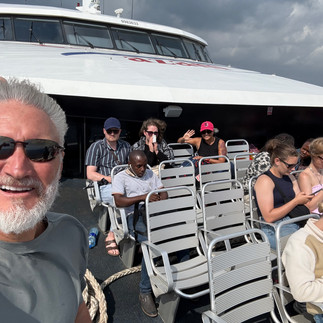
Driving to the Zanzibar ferry from the hotel was the least sane/organized thing we’ve done in quite a while. As we approached the ferry dock, there was a rush of men, to all of the incoming cars and vans, looking to carry luggage. 10 to 15 men in brightly colored vests rushed to each van, trying to be the first to carry the luggage and get a tip. Complete cluster@#$% as we tried to push through people and simply get out of the van! Then two people latched onto to us as we came through the least professional ticket gate I’ve ever seen - a guard and another guy that I think was an employee, sitting on the curb. We had to show our passports and tickets at least six times, go through multiple metal detectors and brush off numerous wannabe bag “helpers”. We got into the actual waiting area, an open air room on the dock separated by VIP, first class, and economy, and because (I can only guess) we are white we got pushed to the VIP area. We told them repeatedly that we only paid for economy tickets, but it didn’t really matter - we ended up with all the other white people. The waiting room had a lot of Germans putting on emergency sunscreen and bug spray, so at least it smelled slightly fragrant, masking the fish market smell from next door. After making it through the craziness, the actual ferry was quite nice and gave us great views of both Dar and Zanzibar, but the entry process into StoneTown, Zanzibar was basically the same as leaving Dar, except in reverse - chaos and constantly craning our necks to see where our bags ended up.
Zanzibar is a beautiful little island off the coast of Dar es Salaam. It was a separate country until it was combined with the mainland to create Tanzania, so it has it’s own government, is almost 99% Muslim (unlike the majority Christian mainland), and has more Persian influence than the mainland. The main city, Stone Town, is a bit like Havana or Marrakech - old colonial buildings alternating between recently renovated and continually falling down. The main part of the city is a mash of curvy little streets and alleys with kids playing alley soccer, a lot of tourist shops and crazy traffic jams. The highlight, for me, was the Freddie Mercury Museum. Freddie was born in Zanzibar and grew up there before moving with his family to England. The museum was small and quaint and but still brought me fully back to my Queen loving days. I shared a quick little teary smile with another elderly hippie lady as we both sang along (quietly) to Love of My Life while standing next to Freddie’s piano.
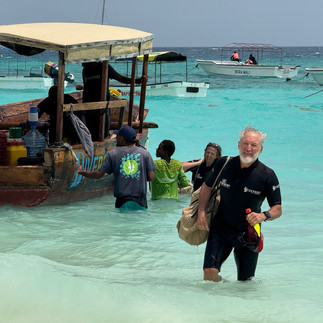
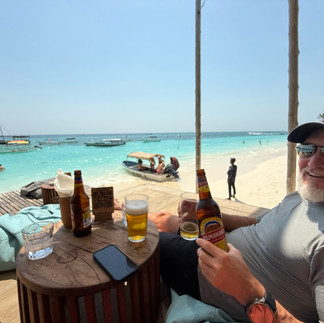
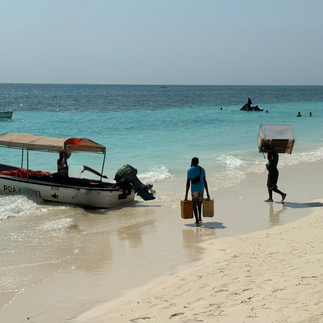
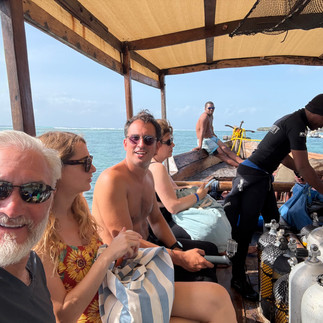
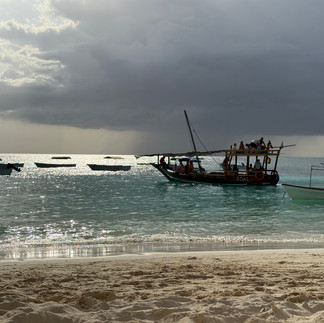
The rest of Zanzibar was mostly a beach vacation, which for me, means diving, and for wife, being free of me for a little while. We were either sitting on the beach staring out at the stunning waters or I was diving in the stunning waters. I liked the diving better here than in both Madagascar and Mauritius, as it was a bit warmer water but it was quite similar with many of the same Indian Ocean sea life and coral formations.
We met a couple of amazing young Canadian ladies that were preparing to start grad schools and had just finished climbing Mt. Kilimanjaro - no ambition there, huh? I am envious of these kids, Florence and Mary, as we have been with many others we met along the way, who, at such a young age are traveling the world and gaining a much different world view than I was able to at that age. Traveling as women, especially young women, holds different tribulations than it does from the lens of an older white guy. They have to have the courage and self-confidence to deal with many things I don’t, such as unwanted attention from wannabe suitors everywhere they go. And they have the spirit to Just Go wherever they want. What a way to start their adult lives - they’re already brilliant but I can only imagine how much more mature and wise they will be due to the expanded worldview they have seen. We also love spending time with young adults - it always reminds us so much of our nieces and nephews, who we miss so much!
Two things also stuck out about Zanzibar - corruption and prostitution. We took a few cab rides around the island and each time, we were stopped by the “Tourist Police”, wearing official government uniforms and looking very self-important. We were never doing anything wrong and were usually getting passed left and right on the road by local vehicles and motorcycles - the only difference is that there were tourists onboard, so the ‘police’ thought the drivers had money. Each time, the driver had to slide a little cash, around $2-$5, to the ‘police’ in order to get let off without a ticket. Apparently, this corruption is the norm and the drivers all keep a little spare cash for the bribes.
The 2nd odd item was seeing a bunch of Maasai tribesmen wandering along the beaches, with their traditional robes, staffs and machete holsters (and cell phones) on their side. They would stand close to the water, typically in groups of two to three, and do nothing. I finally saw one approach a group of women and half-heartedly try to sell some of the bracelets he was carrying. Turns out that they were all prostitutes, jokingly referred to as “Beach Boys” or "Modern Maasai" that were typically from the mainland and had come to the beach to sell their ‘goods’ to the tourist ladies. We occasionally saw a tourist walking arm-in-arm with a Masai down the beach, heading to a more private location. It was never uncomfortable or dangerous (at least what we saw) but it was odd that it was so blatant. I guess there is a big need for tourist hook-up’s here…



































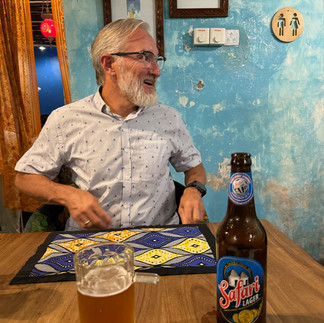


Kilimanjaro (no pics because the mountain was 'shy' that day) -> Arusha -> Serengeti / Ngorongoro Crater


















































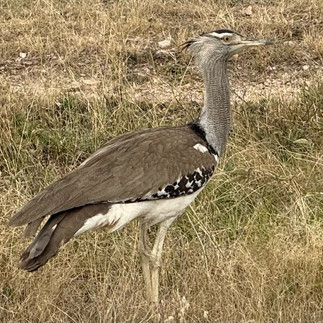

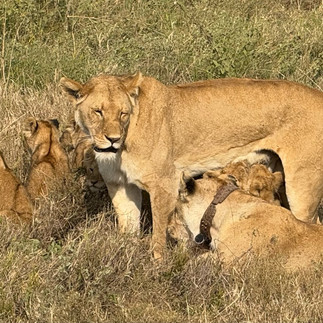



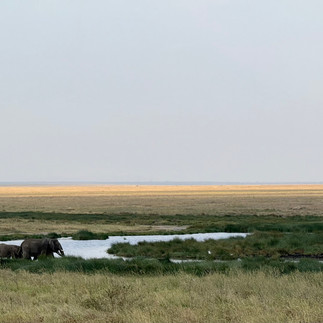


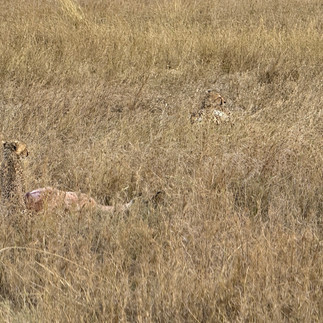



























































































Central and Norther Serengeti / Tarangire and Ngorongoro Crater Safari
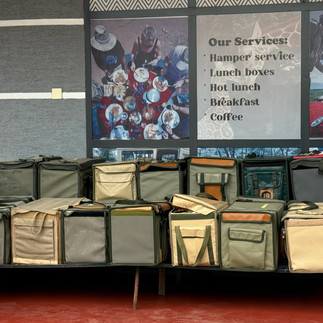
Day 1 started a bit hectic as our driver/guide Bernard, got stuck in traffic and was late, then we had to stop at the Lunchbox place to pick up lunches and had to rearrange the inside of the vehicle. The vehicle, like almost all of the safari vehicles, is a Toyota Land Cruiser. There are occasional Land Rovers in the mix but they are either really old ones or part of a luxury safari. The saying here is “If you want to go out on safari, take a Land Rover, but if you want to come back from the safari, take a Land Cruiser.” We’ll laugh harder at this statement later in the trip, unfortunately. Ours seems to be a bit older than the others, judging from the inside of the truck (no outlets, etc) but the seats are comfortable which is good as we’re going to be in them a LOT over the next week!. Also there is a blown fuse somewhere and the gauges don’t work so Bernard can’t tell how fast he’s really going, which isn’t fast, as EVERY other driver is passing us.
A half hour outside of Arusha, heading to Tarangire National Park, and the countryside is pretty bleak. With no rain for a few months, it’s all brown, save for the few green trees and bushes and cacti. The land could be western Oklahoma, it’s hilly and crossed with jagged, dry ravines that fill up and overflow in the rainy season. Now, they are dying and dusty and the few remaining plants are quickly found by the hungry Maasai goat and cattle herds that are roaming about everywhere. Bernard tells us about the nomadic Maasai tribes that still lead their herds in search of water, which is becoming harder recently due to global warming. The Maasai herders are interesting…they mostly have on the traditional Maasai garb - robes in brightly colored checks and plaids draped around their necks like a toga, carrying a long staff, usually a tree limb. But since it’s winter here they supplement with modern coats. The funniest one was a guy wearing what looked like an American high school lettermen’s jacket on top of his toga. I was tickled a little - a herder had a medium size herd (about 30-40 cattle) and his son, about 6-7, was trailing with his own staff, mimicking the swinging motion of his father but not hitting anywhere close to the cattle. A group of four school aged Maasai boys in purple robes stand on the side of the road and wave at us with huge, white smiles, motioning for money.
Bernard seems overly cautious with his speed and I see why, there are numerous police stops and a cop is sitting in an unmarked car with a speed camera. And they stopped the crazy bus driver that just pulled a jerk Verstappen move around us and almost hit the oncoming car - haha! Another day, we saw a policeman, hiding Keystone Kops’ish behind a roadside bush, pointing his speed laser at oncoming cars. I wouldn’t have seen him but the safari guides were all over the radio about him so we knew where to look.
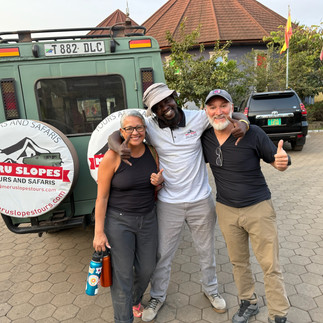
The road to the first park (Tarangire National Park) is literally lines of safari trucks. I can count at least ten directly in front of us on the highway and saw about 50 at a recent rest stop. When we reach the park gates, about two hours from Arusha, we enter into a line of about 100 safari trucks, all basically the same make and model, but with different Safari Company logos on the spare tire covers. It’s cute, as there are some personalized wheel covers, some saying “Just Married, Congrats to so and so” or “Happy Anniversary to so and so”. Ours should have said, “Congrats to Lydia, for traveling 7 straight months with Chris, and only Chris, and NOT stabbing him in the neck for saying something stupid.”
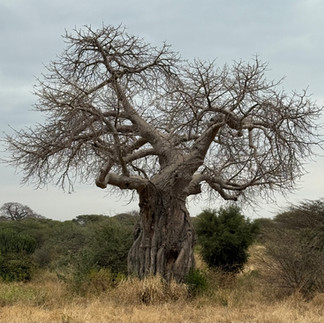
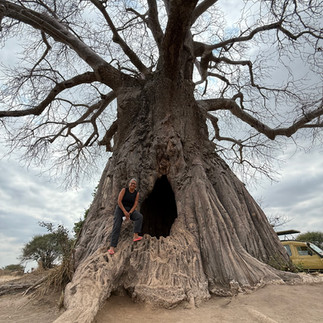
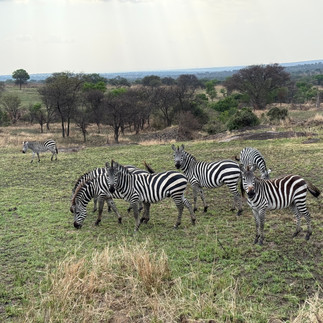
We spent a half day at Tarangire and saw quite a few beautiful animals, mostly elephants, giraffes, zebras and the like. The highlight, oddly, was seeing all of the HUGE Baobab trees. These dwarfed those we saw in Madagascar - apparently here they grow wider rather than taller, so some were 20-30 feet around. One had a hole in it that an entire family could stand inside.
If I was to make a recommendation, either spend another day here to get deeper into the park or skip this park altogether and add another day to the central Serengeti. It was a nice park, and close to Arusha, the major city, but the time would have been better spent in Serengeti. We later met some other safari goers that spent an extra day there and really loved it, but most of the safari companies tend to only do a half day here so it gets pretty congested and the cats are harder to spot in only a half day trip.
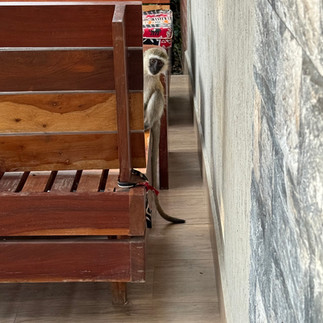
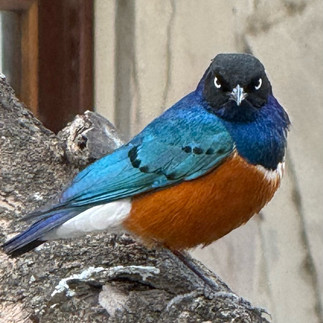
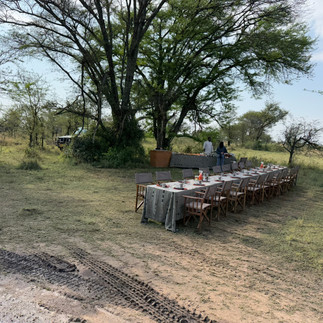
But, we did get our first Safari Lunch, which I thoroughly enjoyed and looked forward to each day. The companies have a really large picnic basket, with nesting metal containers for food and drink, that they get cleaned and refilled each night at whatever lodge or campsite you’re staying at. It doesn’t really stay hot but the food is really good - typically a local rice dish with a salad and chicken/beef and then a fruit plate. There is also a drink tin that contains hot water and coffee/teas. All of this gets spread out at little lunch spots located around the park, complete with marauding monkeys and beautiful birds that are always on-call to steal any unattended food item. At the first stop, a girl had an apple and wasn’t paying attention closely enough and got too close to an adorable little vervet monkey. We heard a shriek as the monkey snatched the apple out of her hand…lesson learned!
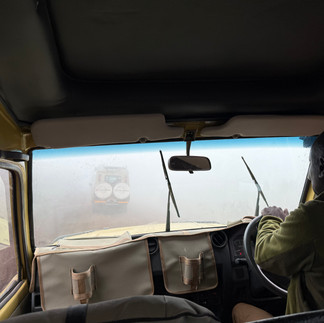
Here’s where the safari took a bad turn. We finally realized why Bernard was going so slowly - there was apparently an issue with 3rd gear and then with the rear fuel tank….or something like that. Bernard got out once on the first day and messed around with the engine and some switches and it seemed to work a little better, meaning he was able to skip third gear and get some speed into fourth. On the second day, we had to ascend up into the Ngorongoro Crater pass, through some crazy dense fog, which was unfortunate, as the views from the top were beautiful. Heading into higher elevation, the truck started struggling mightily and we were regularly getting passed by anything and everything - even semi’s, all on a hideous dirt road with craters every six feet. At that point we realized something was wrong…not good on a mountain pass, in the fog, dodging craters, with oncoming traffic and a 500 foot cliff off to the immediate left. Fortunately the brakes worked.
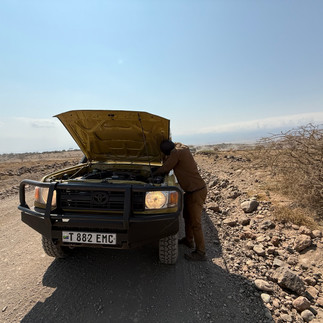
Once we got over and down the mountain we found a place to stop and Bernard went back to work on the truck again. I learned that a major function of the guides is also as “Bush Mechanics” which is where the term originated. Since they are all out for long periods, in remote areas and no shops nearby, they all need to be able to fix many issues. And seriously, if you spend more then five minutes on the roads you can understand why they break down so often. Over the course of the 8 days, I’d say we saw around 40 separate breakdowns on the roads, with three of them being us! We’ve heard the term “African Massage” regularly since South Africa. But it’s nowhere more apropos than here in the Serengeti. The “Massage” part comes in the form of the constant jostling and bouncing and ass-jarring you get on the park trails.
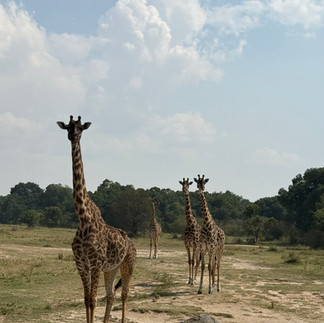
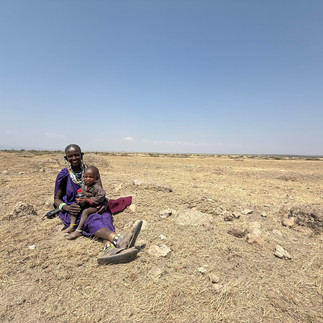
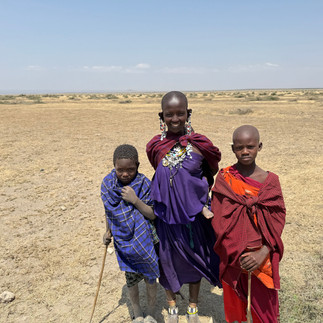
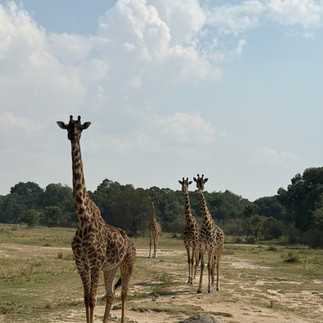
Unfortunately, this time Bernard couldn’t get the truck working correctly. He had radioed back to their base and they decided to take our truck back (4-5 hours) to Arusha, once they were able to transfer us to another truck. Luckily, there was another group from our guide company about 30 minutes behind us, going in the same general direction so we didn’t have to wait long. They would drop us off at our lodge and the company was sending another driver to meet us for the rest of the trip. During the wait, we were able to get out and wander around and gawk at the three giraffes that were just walking by, giving us a bit of a wary look as they passed. I also got to meet a Maasai woman, her baby and two pre-teen sons. I think they just wander around all day, either herding their livestock if they have some or selling their honey on the roadside. I gave her a little money and some water in exchange for a few pics of the family.
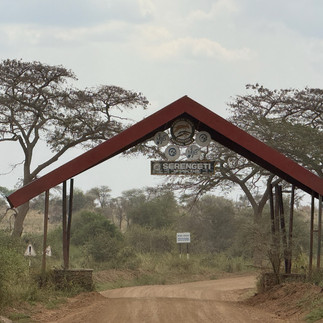
Our ride showed up and we transferred our stuff and hopped in for the four hour drive through Serengeti and to our campsite. Fortunately, our camp was only a few miles from theirs, so it turned out to be almost convenient. Until the new jeep broke down. Seriously. We drove for about an hour and stopped at the Serengeti Gate to have lunch and when we got back in the truck, the clutch platform broke…as we were under the Welcome sign entering the gate!!! Here it got a bit comical. Behind the gate there was a field and the local mechanic was working on other trucks, out in an open field. So we pulled up and the mechanic started taking apart the clutch fluid valve/reservoir. He ended up manufacturing a new baffle (?) from something that looked like an old inner tube and then re-installed the whole system. Turned out that it wasn’t the clutch hydraulics but the actual plate attached to the clutch. So, and there is a great pic of it above, they took a piece of wood and jammed it into the clutch plate, next to the gas pedal, as a temporary fix. Our driver gave the guy the equivalent of a $5 bill (10,000 Schillings) and off we went. He said he’d have to weld it once we got to the next shop but it should hold until then. OK…
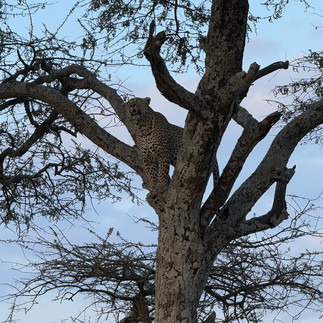
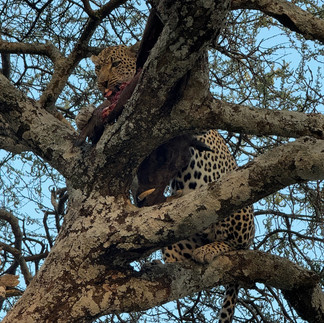
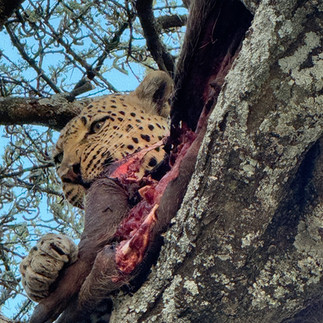
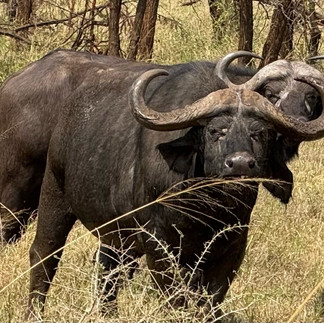
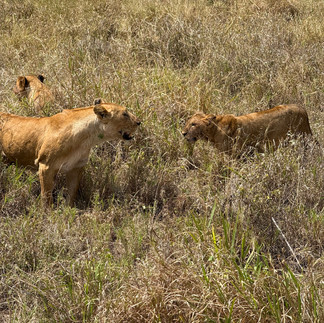
That 2nd afternoon, even with all of the car issues and delays, was magical. As soon as we entered the park, we saw a Serval cat, hunting in the high grass right next to the road. Then we lucked upon a whole pride of Lions with about 14 young cubs. Then we saw a family of beautiful Cheetahs enjoying a fresh impala lunch. And finally, we came upon a Leopard, high in a tree, with his unfortunate warthog dinner. None of the animals really seemed bothered by the flow of trucks and people ogling them - they just went ahead with their lunch or naps or cleaning like we weren’t there.
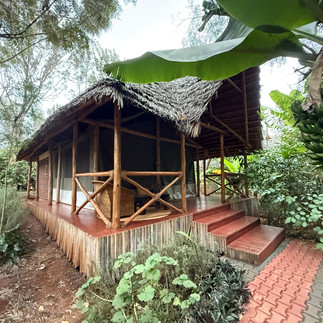
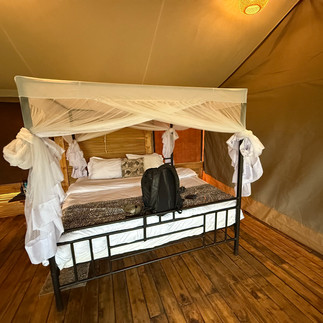
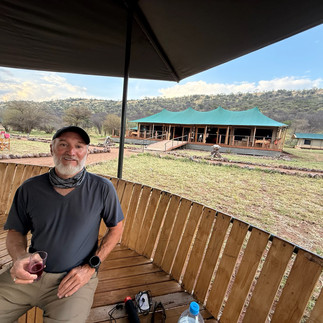
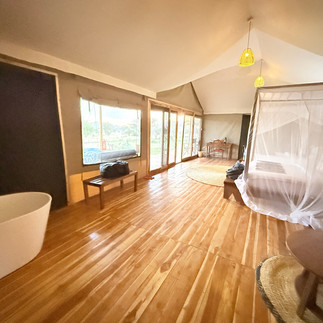
That day we also experienced our first Safari Camp. Unfortunately we got there really late due to all of the car problems, so we didn’t get to enjoy it as much as we’d have liked, but it was amazing. Basically a luxury tent, with separate rooms, a shower and toilet, and a large bed covered with mosquito netting. I really enjoyed staying in each of the tented campsites throughout the trip. And the next day our new guide (Patrick) arrived with a MUCH better car, and an additional day to the schedule to make up for all of the previous issues, courtesy of Lyd doing some strategic complaining!
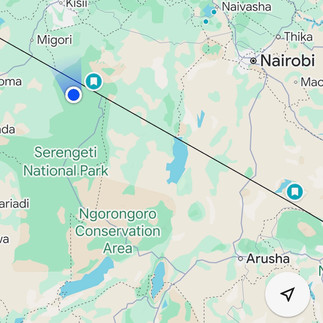
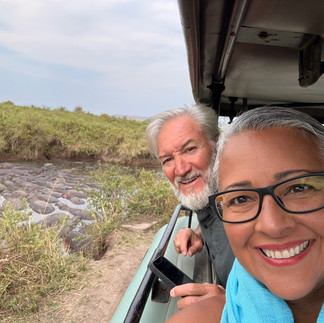
Over the next few days, we toured the Northern and Central Serengeti, doing game drives during the day as we made our way to each new campsite. During the days we were in the vehicles for anywhere from 8-10 hours but were always able to stand and stretch as we stopped to look at different game, birds and landscapes. The constant rough terrain was hard on the backs but nonstop jostling actually fooled our “smart” watches into thinking we did 20,000 steps each day! The goal was to see animals along the way as we made our way North to the Mara River, near the Kenya border, where the dramatics of the Great Migration culminate with the crazy Wildebeest and Zebra crossings.
I can see why the Great Migration Crossing is such a big deal - it’s dramatic. So far we’ve been here for a full day and a half, basically parked in one place looking at the cliff and beach directly across the river from us, about 150 meters away. In the river between us there lie about 7 to 10 quite large crocodiles that are making the wildebeest and zebras really nervous. There are about 10,000 in the herd, with a few hundred zebras in small herds interspersed throughout. The zebras have much better eyesight and can spot the crocs, so they act as a sort of sentry / forward reconnaissance crew. The herd has really no leaders and it’s funny, they go to the edge of the cliff and look out for a while, spot the crocs, and then mull about and finally fall back. The herd looks like the army in the William Wallace movie, spread out all over about a kilometer wide field of view. Occasionally there will be new herd come in from the left or right, making the overall herd bigger. They keep moving to the right, looking over the edge and see crocs, mill about for a bit, and then move to the left a few hundred meters. And then they’ll circle back around and start again. This went on all day yesterday but there seems to be no real decision makers in the group. And the crocs aren’t smart - if they’d simply stay across the river, submerged for a bit, they could lull the herd into a false sense of security and draw them into the water. But the crocs, as soon as they see movement, start swimming across the river and eventually find their way to the bank, where they sun themselves, scaring off any potential crossers. These aren’t little crocs, by the way - some appear to be 16-20 feet long.
Every once in a while an ambitious wildebeest will climb down from the top ledge and explore the slope into the water. So far, each time they hunt around, eat a little and then hop back up to the top of the ledge, about 15-20 feet above the water line. We joke that there seems to be no tactics or strategy from the herd - they just keep looking over the ledge and shifting left or right, or retreating back into the forests a few hundred meters back from the bank. This has to be hell for our guide, Patrick, who I am sure would rather be out searching for lions and leopards and cheetahs, but he’s playing along for the boring tourists nicely. I only half-joked with Patrick that he has the best office in the world - it truly is stunning here.
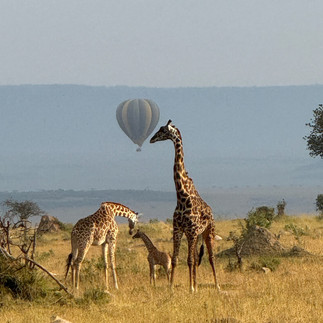
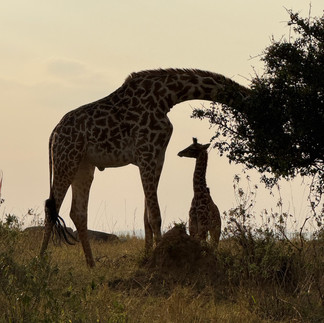
We keep taking sunset pics from the beaches but the sunrise views here, with the hot-air balloons taking off in the distance, are worth getting up at 5 in the morning. And when you throw in a baby giraffe in the shot it’s a completely different level cool.
The four days inside Serengeti were amazing - we stayed each night in a different tented campsite. Meaning, there were no walls. And no fences. And no barriers keeping the wild animals from rummaging through our camp. Which is really friggin cool…well, like 51% cool and 49% scary… One night we heard this huffing and puffing behind our tent around 3 or 4 in the morning. Turned out that there was an elephant right behind our tent - we saw the poop that confirmed it. Another night, we heard more huffing and some odd little calls. We got the courage to lift up the tent flaps and saw a herd of wildebeest in our front yard yard, 15 feet from the tent. A family of baboons ambled through the outskirts one night, foraging next to a couple of warthogs. The camp attendants said that it isn’t uncommon to see a lion family or a leopard wander through. It’s one thing to see them from the inside of a safari vehicle but completely another thrill to know they have carte blanche to wander through your living room…and poop all over it. Lyd now thinks she’s an expert tracker because she can tell the difference between zebra and wildebeest hoof marks. Fortunately, she has stopped short in her animal tracking training and leaves the poop examinations to the professionals.
The tented camps are really amazing - those around the migration zones are seasonal and typically move every three months or so to the new migration routes. There’s always a migration path as the wildebeest and zebras make the constant trek to water, going north to Kenya and crossing back after a few weeks or months. In the spring, the camps set up in a different area to allow easy access to the calving route of the wildebeest. I think it’s really all just to view the potential feeding frenzy from the crocs in the river crossing or the lions in the calving areas - the circle of life is always revolving…as cruel as it sounds.
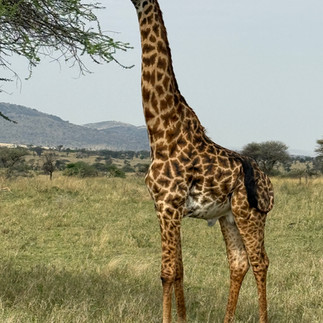
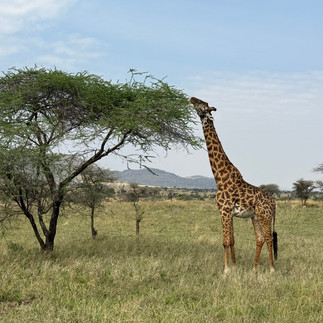
This is the reason I travel…there is nothing so exhilarating as standing up in the top viewing platform of a rolling safari truck, wind in the face and rolling up to a giraffe eating from a tree on the side of the road. Or of being the first to spot a leopard dangling his legs (and fresh catch) from the limb of an acacia tree.
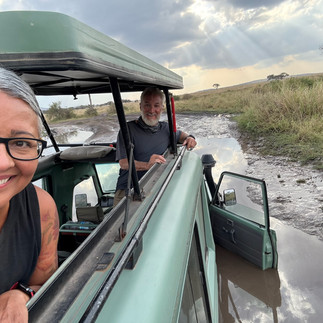
Patrick, our replacement guide, really deserves more press, as he was wonderful and made the trip SO much better. On top of being a great guy, who lucked into his dream job, he is thoroughly knowledgeable in all aspects of the safari. He knows the gestational periods and habits of every animal. Knows the migrational characteristics of the birds. Knows where to look to see the cheetah head popping up among the tall grasses. Pretty much every aspect of the safari, he knows. He also knows how to get a severely stuck Land Cruiser out of a three foot mud puddle. At least this car issue was a fun one, for us…maybe not for him! We got completely mired in a pool that was much deeper and stickier than it looked and had to call in reinforcements. Unfortunately, for Patrick, he had to get out in the muck, up to his knees, and attach a chain for another truck to help pull us out. I think we were as popular as many of the lion prides, as there was soon a group of trucks with other tourists, all filming us stuck in the mud. And fortunately, this water trap wasn’t connected to the nearby Hippo pool, which was basically just a large stinky cesspool.
After leaving the Serengeti, we went to the Ngorongoro Crater, a UNESCO site. It was formed millions of years ago from a volcano, and looked like a valley you’d see in Land of the Lost. About a 20 KM circle, it was ringed all around with high walls. The base was generally flat with a large lake, a forest, and large plains that house almost every animal except giraffes. There was a large population of flamingoes and also a healthy population of Black Rhinos (the two horned, endangered kind). The highlight for me was seeing the rhino, along with her rhino baby, but we weren’t close enough for a good pic, unfortunately.
As with everything else on this trip, the views were stunning and WAY better than any Wide World of Omaha Marlin Perkins show I ever watched as a kid. I already want to go back and do it again!


Comments